




Savage L&B Dodge Chrysler Jeep

Blog / Savage L&B Tips

Making the EV Switch this Fall: Everything You Need to Know

istockphoto-1387159408-612x612

The electric vehicle movement is in full swing, with no signs of slowing down. As the leaves change and Autumn makes its presence felt, there's never been a better time to make the transition to an electric or hybrid vehicle. Here's a primer to help explain why it's time to make the switch to electric and why Savage L&B is your premier destination when you do.

Reasons To Make the Switch 

Range: In years past, much of the reluctance to make the transition to electric was a product of the relatively limited range of EVs. Flash forward to the present, where most EVs deliver over 200 miles of range on a full charge, making them increasingly comparable to gas cars in terms of mileage. Some newer long-range models offer upwards of 300 miles of EPA-estimated range. 

Price: While new EVs are becoming an increasingly affordable proposition by themselves, the savings continue when you consider both the price of gas and the cost of maintenance. Compared to the unpredictable gas market, charging your EV provides a cheaper, consistent alternative. In fact, electric drivers save an average of $1,000 per year on gas money when they make the switch. Furthermore, EVs require far less maintenance than gas vehicles; their engines see far less wear and tear, and they render oil changes obsolete.

Practical concerns: EV charging options have never been more numerous, as EVs can be charged at home, at work, or on the road; the smaller size of electric motors offers room for more rear storage space; and of course, with no direct emissions, EVs are doing their part to dramatically decrease our carbon footprint.

Perfect for Fall Plans 

With so much to do in the greater Reading area this Fall, the first thing you need is a dependable ride that won't break down on you as the weather gets colder. With a new EV, you won't have to worry about maintenance and performance concerns, allowing you to immerse yourself in all the season has to offer. Here are just a few ideas to check out after your trip to Savage L&B:

  • The Reading Public Museum: Explore an undersea odyssey this Fall with the museum’s Voyage To The Deep exhibit, running until January 7, 2024. Based on Jules Verne’s 20,000 Leagues Under The Sea, Voyage To The Deep invites guests to explore the wonders of our oceans. 
  • The Fairgrounds Farmers Market: Stock up for the holiday season with offerings from over 65 local vendors at Berks’ County’s award-winning farmers market.
  • Santander Arena: Embrace your inner Puddy and hit the ice at the Santander Arena, as the season gets underway for the '23-'24 Reading Royals, an affiliate of the Philadelphia Flyers.

Charging Stations Near You 

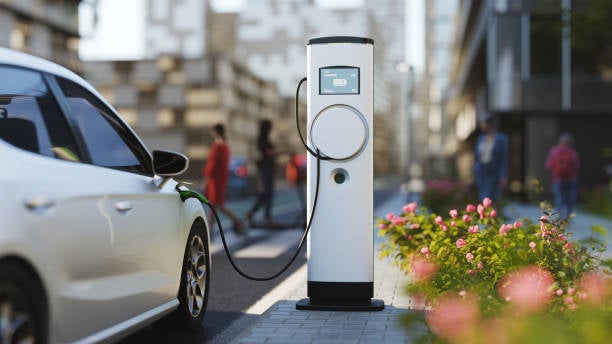
Like the piles of leaves on your lawn, the amount of nearby charging stations in the Reading area is only continuing to grow. In as little as five years from now, it may become easier to list the locations where there aren’t charging stations. For now, here’s just a few available public charging stations: 

  • ChargePoint Charging Station on 815 Lancaster Ave., Reading, PA 19607 
  • ChargePoint Charging Station on 1015 Lancaster Ave., Reading, PA 19607 
  • ChargePoint Charging Station on 210 George St., Reading, PA 19607 
  • Volta Charging Station in the Shillington Shopping Center, Reading, PA 19607 
  • Destination Charging Center on 701 Penn St., Reading, PA 19601 

Even if you don’t yet own an EV, you’ve probably noticed these charging stations popping up everywhere – and they’re only becoming more ubiquitous as we stretch further into the 21st century. 

It’s taken some time, but it seems that a general public consensus is beginning to emerge that EVs are our clearest path to a more efficient tomorrow. Become part of the electric future today by stopping in at Reading's number one EV spot, Savage L&B. Whether or not you're ready to make the switch, our awesome selection of new and used vehicles will ensure that you’re prepared for the Fall season and all it has to offer.
Posted in:

Related Posts

Auto mechanic checking the condition of the car. The technician uses the tablet to check.

What Should You Do During A Recall?

Ensuring your safety while driving is paramount, but what steps should you take if your vehicle is subject to a recall? Every recall demands serious attention! Stay ahead with our straightforward guide to avoid being caught off guard. What Is a Recall? When there’s a recall, the National Highway Traffic Safety Administration (NHTSA) determines if a vehicle does not meet motor vehicle safety standards. Manufacturers are then required to file a report including details of the vehicle, the number of vehicles affected, equipment affected, a description of the defect, what led up to the decision to recall, an explanation, and a recall schedule. Registered owners must receive a recall notification from manufacturers by first-class mail within 60 days of the recall instructing owners on how to get the issue fixed, the time frame of the fix, and how long the repair should take. How to Verify a Recall The NHTSA website suggests that using your license plate to search is among the latest and most effective methods for recall verification. Despite the requirement for manufacturers to inform registered vehicle owners within 60 days, reliance on physical mail can be inconsistent. If you suspect a recall or have encountered news about a potential one affecting your car's make and model, utilizing the NHTSA website to search for recalls using your vehicle's license plate or Vehicle Identification Number (VIN) stands out as the simplest and most efficient safety precaution. What To Do When Your Car Is Recalled? Once you find out if the recall applies to your vehicle or parts, there are three options: repair, replace, or refund. By law, the manufacturer must choose one of the three options to correct the issue. If the manufacturer has chosen repair, your vehicle or part must be repaired by the manufacturer at no cost to the vehicle owner. Replacement means that if the problem can’t be fixed, the manufacturer must provide you with another similar or identical model. A refund option involves the manufacturer refunding the purchase price of your vehicle, minus depreciation. These options also apply to accessories such as car seats. Your recall letter or warning should notify you if your car is too dangerous to drive. Regardless, the recall issue should be resolved immediately by taking your vehicle to a local authorized dealership matching the make of your car. Remember, the bigger the recall, the longer the waitlist for an appointment. How to Book a Recall Repair Appointment at Savage L&B Recalls must be done at dealerships for recording purposes, quality monitoring, and making recalled parts available to manufacturers for inspection. While the NHTSA gives manufacturers a grace period for repairs to be made available after a recall, you should contact your local dealership to book an appointment as early as possible to beat the crowds. Establishing a friendly relationship with your local registered dealership can pay off during a difficult recall period! Has your vehicle been recalled? Call Savage L&B immediately to book your recall repair appointment and ensure your vehicle is functioning to its intended safety guidelines and performing its best. Our team is happy to help, from minor service to full recall assistance!

Five Engine Sounds You Shouldn't Ignore

Aside from a few key exceptions – Optimus Prime or KITT, for example – our cars aren't proficient in English. Nevertheless, that doesn't refute the fact that your vehicle certainly communicates with you. The sound might not always be pleasant to hear, though. Differences between the normal sounds your car generates and the more worrying noises can be subtle, so it's crucial to pay attention. As you wouldn't overlook a person's cry for assistance, you shouldn't ignore your car when it's essentially doing the same. By attempting to understand what's troubling it, you can then proceed to take action. Here at Savage L&B, our team is always on the lookout for out-of-the-ordinary engine sounds. Here's an outline of various noises your vehicle may exhibit – and importantly, what these sounds might indicate. Squealing / Chirping High-pitched squeaks should not be considered a persistent annoyance to the driver – they often manifest a loose or worn belt. If you notice such sounds, especially from the engine, it's likely your serpentine belt, controlling your alternator, power steering pump, and water pump. If you suspect this, schedule a service appointment without delay, as a malfunctioning belt can result in overheating, loss of power steering – and a daunting repair bill. However, before you do, confirm the squealing isn’t from your brakes. Manufacturers intentionally add a small metal piece in your brake pads, creating a screeching sound to alert you that your brake pads are becoming thin. Observing your brakes pads’ state is essential, but brake pad replacement is far more common (and less expensive) than swapping your serpentine belt. Knocking / Tapping / Pinging It’s not someone lodged in your hood (hopefully). A faint thumping or ticking noise from the engine could denote an issue with the engine bearings. These bearings support the engine’s revolving parts – and they’re not hesitant about signalling when they’re declining. Conversely, it could be a problem related to low-quality fuel or old spark plugs – both can induce further damage or engine failure. To avert this, contact our Service Department quickly at the initial sign of these insistent noises. Rattling / Clanking If you perceive a rumbling in your engine, it’s one of the most directly worrying car sounds. It’s an alert that something – potentially crucial for your safety – is unattached or mishandled. If you’ve inspected under your hood and are uncertain about what could be wrong, let an expert take a look. A gentle rattling or profound roar could be a more immediate warning, as it often points to a deteriorating catalytic converter. Regrettably, the only remedy in this case is to completely replace the converter. Follow a regular maintenance schedule, and hopefully, you won't encounter this situation. Whoosing / Hissing Typically, these noises result from a leak in the exhaust system. If overlooked, this leak can lessen both engine performance and fuel economy. The leak could stem from various places: punctures in the muffler, catalytic converter, or exhaust manifold are all potential leak sources. Luckily, our Parts Department stocks everything you need to restore harmony to your vehicle and have it operating smoothly once more. A sustained hissing could also be due to coolant leakage or the vehicle’s cooling system overheating. If you think your car is overheating, halt and find a spot to park without delay – for your own safety and the health of your engine. Transmission Grinding Persistent grinding noises frequently originate from transmission problems and are most noticeable when shifting or altering gears. (Automatic transmissions produce jolting and trembling rather than a grinding noise.) Be aware of other symptoms of a malfunctioning transmission, like leaking fluid, a burnt smell, or a power shortfall. Consult with a seasoned or certified professional soon to avoid hefty transmission repair expenses. Relish The Tranquility The most tranquil sound your vehicle can produce is the lack of sound. A silent engine is a healthy engine, and at Savage L&B, we’re delighted to provide your vehicle the silent treatment. Have faith in our team of seasoned technicians for battery diagnosis, oil changes, and any other essential service. When abnormal noises persist, it might be the right time to consider a new vehicle. Bring your old car to Savage and trade it for a new or certified pre-owned ride today. From the Jeep Renegade to the Dodge Durango, our vehicles purr like kittens and drive like dreams.

Understanding the Importance of Rotating and Balancing Your Tires

Let's be real for a moment: the last time a dealer recommended a tire rotation, did you think you were being hustled? Because the vast majority of dealerships and manufacturers do such a poor job of explaining what tire rotation is, drivers understandably suspect it's just a generic add-on to your service estimate. Not only are these procedures legitimate, rotating and balancing your tires regularly are some of the most surefire ways to increase your tires’ lifespan. Courtesy of our experienced technicians here at Savage L&B, here’s why you should make tire rotations a regular part of your maintenance routine. What Exactly Is Tire Rotation? Tire rotation is actually quite a simple process. It involves moving your tires from one area of your car to another. Typical tire rotation follows the same pattern: with front-wheel-drive cars, front tires typically get shifted straight back, while the rear tires are moved to opposite sides on the front. The opposite applies for rear-wheel-drive and all-wheel-drive vehicles, in which the rear tires are moved straight forward, while the front wheels are moved to opposite sides of the rear. You don’t need to rotate your tires excessively – the recommended interval is 5,000 to 8,000 miles – but requesting a tire rotation whenever you get an oil change (or at least every other time) is a safe habit to adopt. If you notice a decrease in tire pressure or abnormal vibrations when steering, these could be signals that your tires are due for a relocation. Okay, I Know What Tire Rotation Is. But Why Is It Important? Why is it important for your vehicle to shuffle its tires around, like school kids getting a new seating assignment? Well, tire rotation helps prevent uneven wear caused by the front of your car being heavier than the rear. By balancing the tread on your tires, you'll experience a smoother ride with no vibrations. Plus, it'll give you better grip on slippery or narrow roads, enhancing your safety on the road. On the other hand, an uneven tread on your tires can lead to faster wear and deflation, which in turn reduces fuel efficiency. That's why tire rotation is vital not only for preserving the health of your tires, but also for the well-being of your engine. If the air pressure in your tires remains low, it may be time to time to schedule a service appointment with us. So Then... What’s Tire Balancing? When balancing, mechanics use a machine to confirm that the weight of the tire and wheel are balanced. If they’re unequal, small lead weights are attached to the rim of the wheel until an equilibrium is attained. Making sure your tires are properly balanced is just as important as keeping up with regular rotations. Both these procedures follow the same recommended timelines. If you decide to have your tires rotated and balanced with each oil change, many auto shops will even offer it as a complimentary service. Find Your Perfect Balance Today We make sure everything is in its right place here at Savage L&B. If you're looking to kick off your year with a new or used vehicle - from the adventurous Jeep Renegade to the forward-thinking Chrysler Pacifica Plug-In Hybrid - simply stop in at Robesonia's most-trusted dealership.